TREE WELL & SNOW IMMERSION SAFETY
1. Formation of a Tree Well
What Is a Tree Well?
A tree well is a hole or depression that forms around the base of a tree where loose, unconsolidated snow builds up. Tree well danger is real. Roughly 70% of Snow Immersion Suffocation (SIS) incidents involve tree wells, and the consequences can be severe. Skiers and riders who fall into a tree well become trapped in loose, unconsolidated snow, often upside down/headfirst or unable to move.
A void formed by a tree (evergreens) with low-hanging branches + light or deep unconsolidated snow
Difficult or impossible to see from above
Risk-increased conditions are during or after major storms
How Do They Form?
Low-hanging branches prevent snow consolidation
Voids become deep cavities
Often hidden beneath overhanging limbs
Recognition & Avoidance
Give trees a wide berth (distance)
Look for gaps between trees
Slow down in dense forest
Avoid turning directly above a tree
Two elements are required to form a tree well:
A tree with branches (especially evergreens)
Snow, especially light-density or deep accumulated snow
A tree well accident occurs when:
On ungroomed terrain with deep snow and trees
A person falls into the void at the base of a tree
Snow collapses around their body
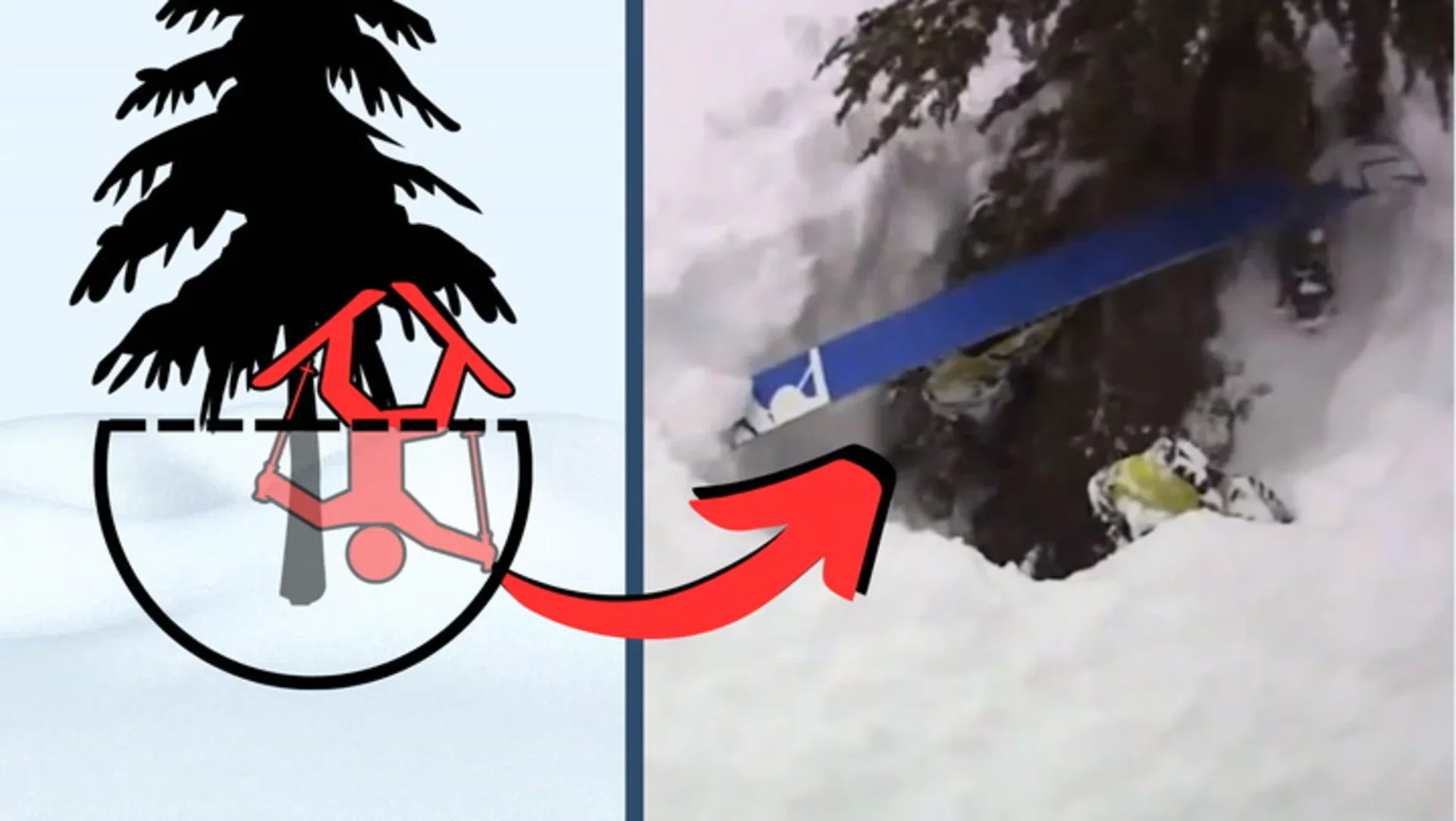
A Person falls headfirst into the tree well
Increased struggling leads to deeper entrapment and possible suffocation
Only about 10% of people who fall into a tree well can self‑rescue.
This means 90% require immediate help from a partner to survive. Many survivors were only saved because someone else found them.
Riding with a partner, maintaining visual contact, and staying alert in deep snow conditions are essential steps to staying safe.
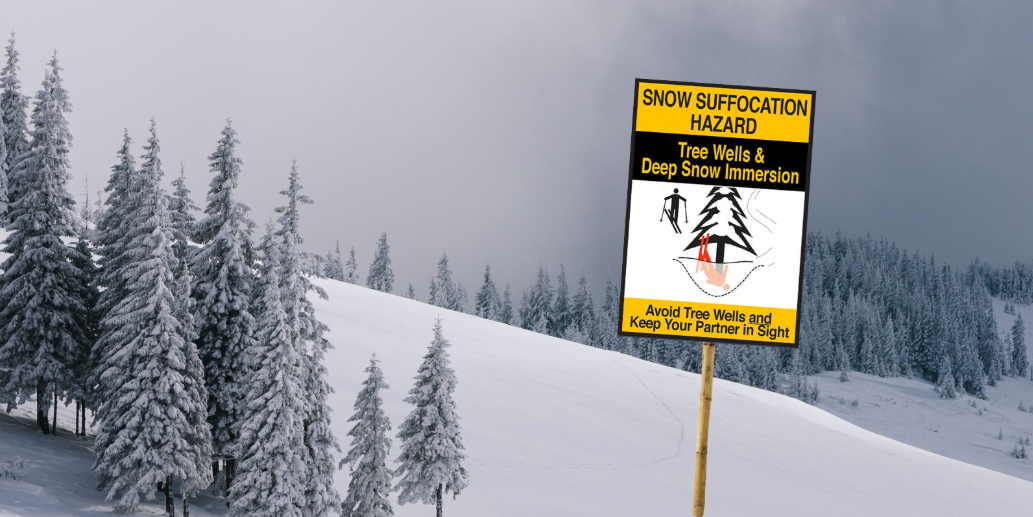

2. Safe Tree Skiing & Riding
A. How to Ski or Ride in Trees
Look for wide-open spaces, not the trees
Ski with a buddy, in close proximity
Ski in short, predetermined distances and regroup
Keep cellphone in chest pocket for easy access
Use a whistle, worn near the mouth
Utilise tail gunners
Maintain constant sound cues in low visibility (Marco Polo, Yodel)
Ski slowly where sightlines are short
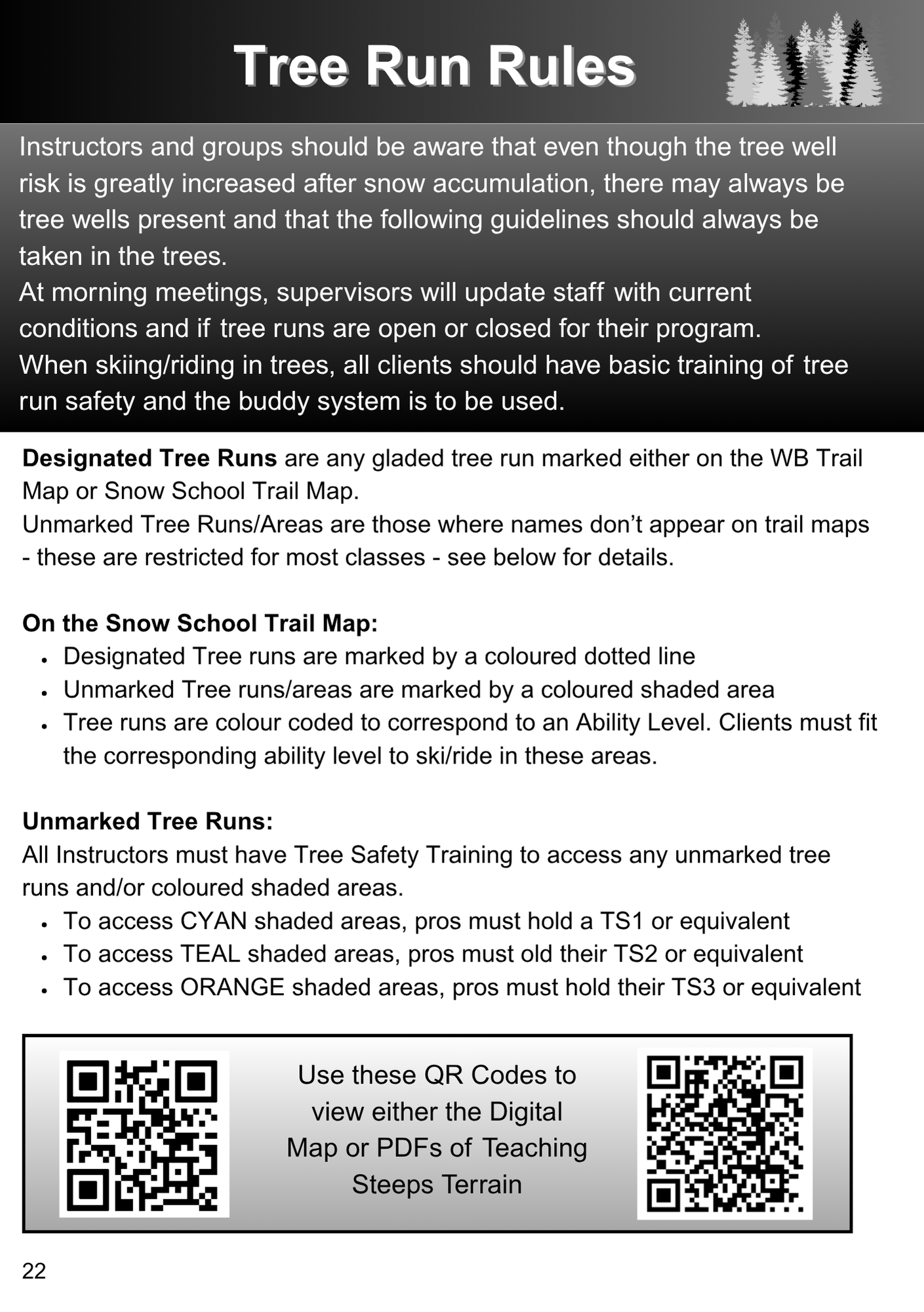
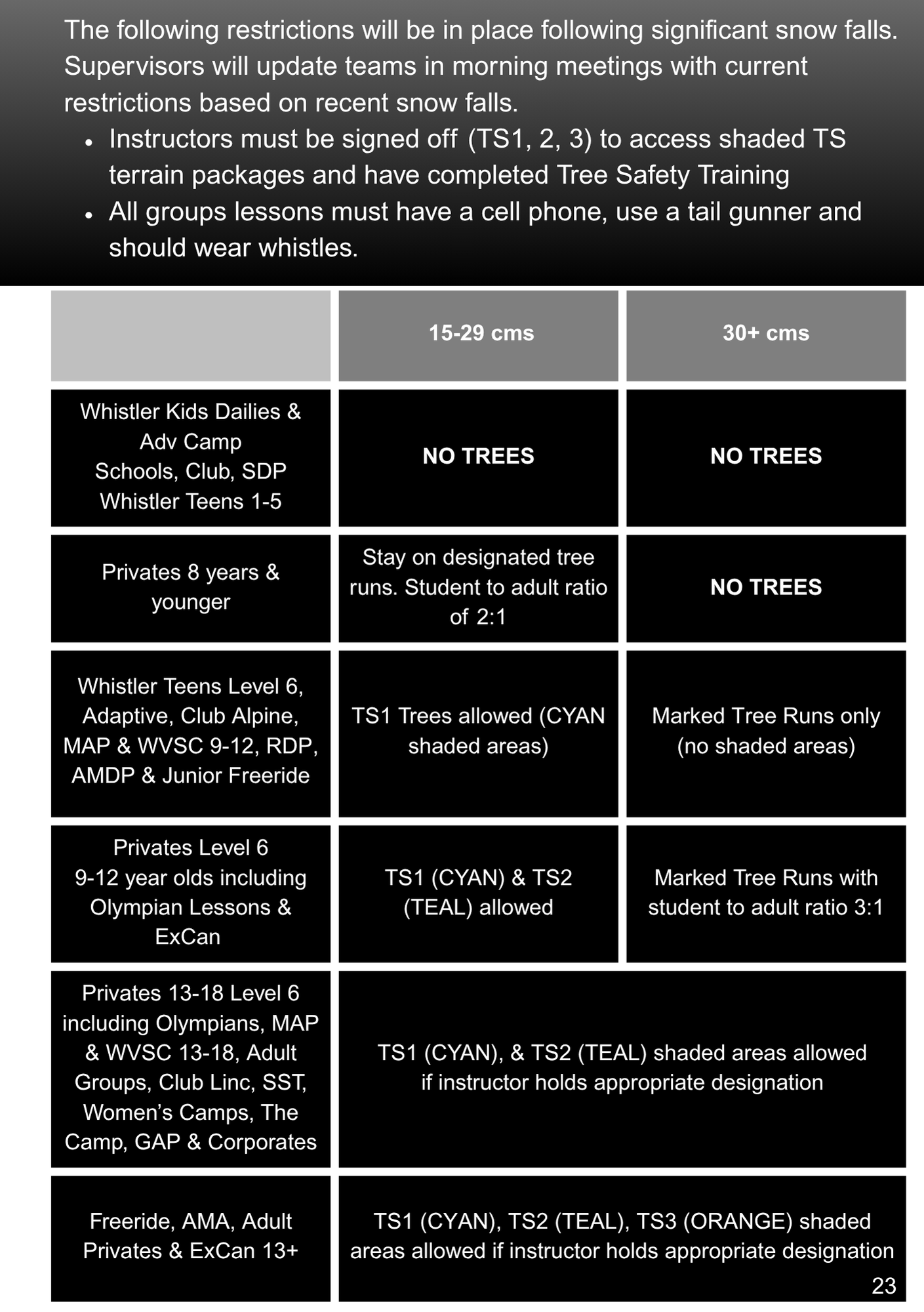
Follow +15 cm rules for Kids lesson
Use quick-release or no pole straps
Apply the STOP Method:
Stop – Think – Options – Power
Always evaluate:
“Did we give enough space in all directions?”
“What is the worst case, and have we allowed room for it?”
B. Tactical Skiing & Riding Tips
Always skiing/riding with a partner and keeping them in sight
Complete your turn before getting close to trees
Looking for wide spaces and far ahead to maintain flow
Use bumps and terrain flow to guide movement
Follow the leader in wider spacing, not a tight single file
Use speed appropriate to conditions and hazard density
Tactics when sightlines are short:
Slow speed
Controlled, deliberate movements
Verbal communication
Frequent regroup points
3. What To Do If YOU Are Submerged?
Only about 10% of people who fall into a tree well can self‑rescue.
This means 90% require immediate help from a partner to survive. Many survivors were only saved because someone else found them.
If you fall into a tree well:
Call for help immediately / Shout: use “Wipe out!” or whistle
Try to keep your head above the snow by grabbing branches or the tree trunk
Make yourself big to avoid sinking deeper (Create an “X” with your body)
Fight to stay upright/Head Up, Feet Down
If you fall into a tree well headfirst:
Remain calm to prevent snow collapse around the face
Use your arm to create an air pocket
· Move as little as possible
· Wait for external rescue (if possible, blow whistle or call patrol)
*Avoiding aggressive struggle will minimise the risk of more snow collapsing onto you, leading to suffocation.
4. What To Do If YOUR PARTNER Is Submerged
If your partner goes down and you lose sight of them, assume immediately that they need help and begin searching right away. You and your partner are the most important factors in preventing Snow Immersion Suffocation. Stay aware, communicate clearly, and ski and ride accordingly.
Key Rescue Steps:
Stop downhill of the victim
Do NOT push snow toward the head
Do NOT remove the victim’s skis
Dig from the downhill side
Shovel snow downhill, creating a tunnel toward the airway
Clear snow from their airway first
Add rescuers as needed
Use proper lifting mechanics
Ask nearby people to call Patrol
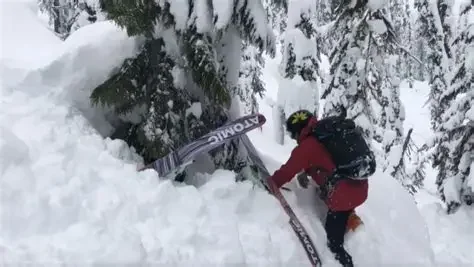
4.1 Simple Rescue (No Shovels / No Gear)
Recovery principles:
Ensure scene safety
Ask nearby people to call Patrol
Reassure and calm the patient
Rescuer may remove their own skis (pros & cons — skis distribute weight, prevent post-holing)
Do NOT remove the subject’s skis
Approach carefully, avoiding pushing snow toward the subject’s head
Recovery Techniques
Stop downhill of the victim
Do NOT push snow toward the head
Do NOT remove the victim’s skis
Dig from the downhill side, push snow downhill
Clear the airway first
Remove poles
Drop to knees, get low
Wrap arms diagonally around the subject’s boots
Coordinate efforts: “On the count of three…”
Add additional rescuers as needed
If the subject cannot breathe, an experienced rescuer may check the airway from the side
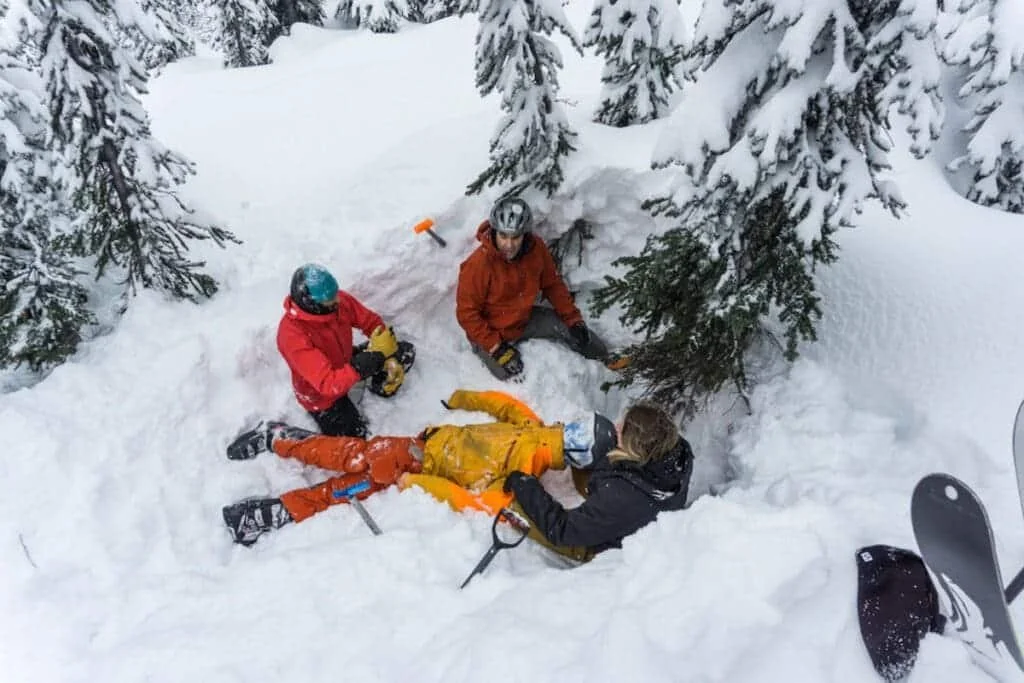
4.2 Advanced Rescue (With Shovel & Gear)
Advanced rescue steps:
Ensure scene safety
Stay with your partner
Call for help immediately
Go directly for the airway
Determine where the head is
Tunnel from downhill, not overhead
Avoid pushing more snow onto the subject
Expand tunnel carefully until the airway is accessible
Clear airway and continue extrication
Continue first aid as required
Improved Safety Recommendation
It is highly recommended that if you plan to ski or ride in ungroomed terrain with deep snow and trees, you carry a shovel, a cellphone in a secure chest pocket, and a tree well whistle that is easily accessible to your mouth. A whistle and/or a cellphone can significantly increase your chances of being located if you become trapped in a tree well.
5. Kids-Specific Considerations
Tree rules must be applied strictly (SS Training Safety Manual)
Supervision distances reduced
Even more frequent regrouping
Whistles mandatory
Lower-angle terrain only
Highlight safety rules used with kids when teaching adults
Take Care of Yourself
Watch Videos & Complete Tree Well & Snow Immersion Safety Quiz
https://forms.office.com/r/UKerYyWJq6?origin=lprLink